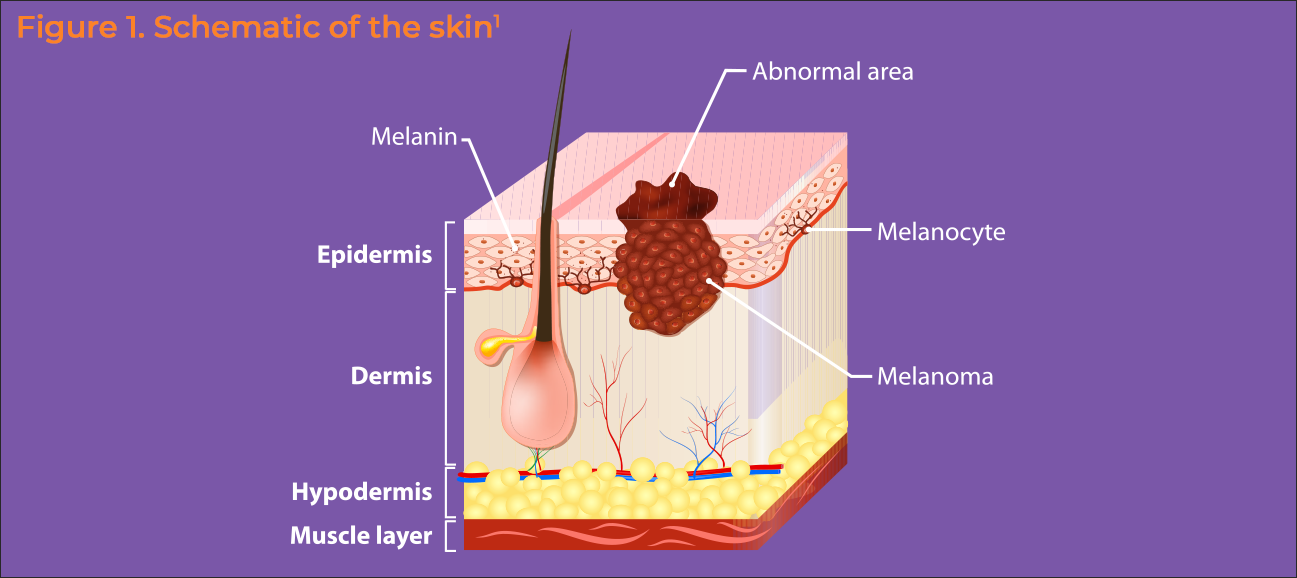
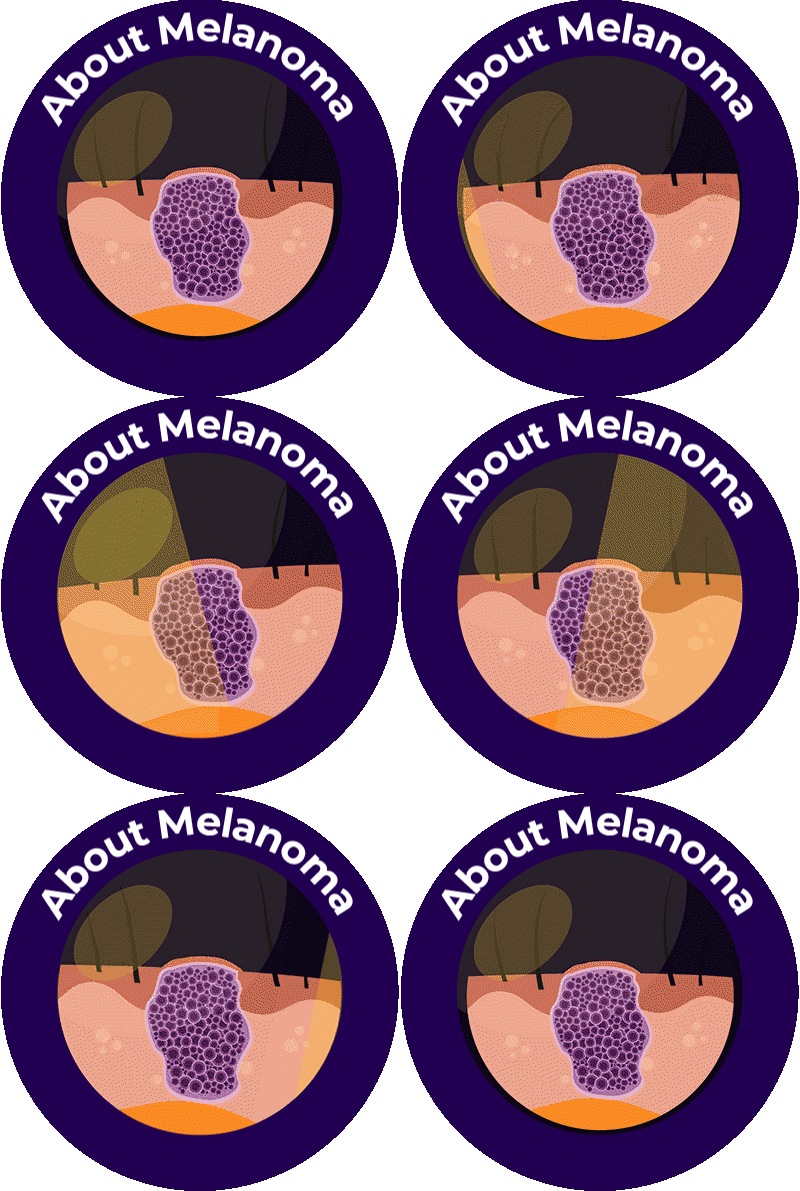
Melanoma of the skin is a cancer that starts in skin cells called melanocytes.
As shown Figure 1, the skin is made up of three layers: the outermost, called the epidermis, the middle layer called the dermis, and the innermost layer, called the hypodermis, (fat layer).1 The epidermis includes three cell types: squamous cells, basal cells, and melanocytes. The melanocytes are found in the inner layer of the epidermis and are responsible for skin color.1
Melanoma forms when melanocytes start to grow and spread more quickly than normal cells.1
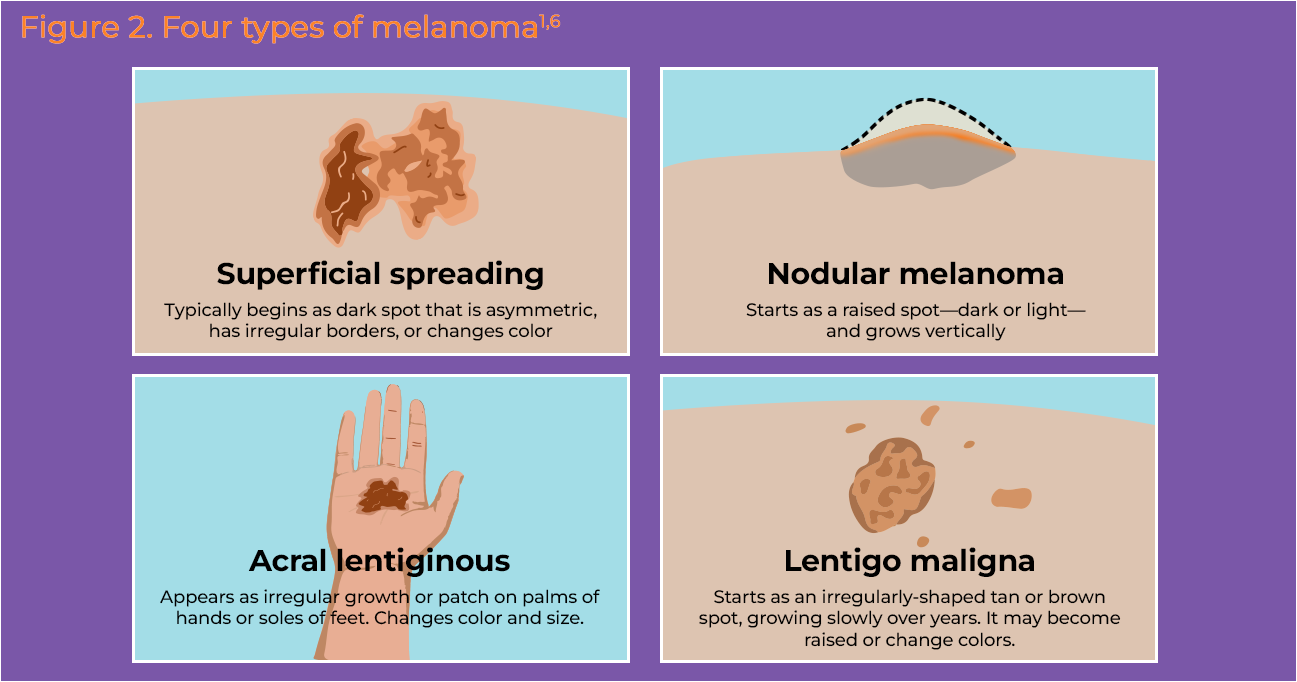
Superficial spreading melanoma is the most common type, followed by nodular melanoma.2 Lentigo maligna is a slow-growing melanoma and is commonly seen in areas exposed often to the sun.2,3 Acral lentiginous melanomas typically develop in darker skinned people, and appear on the palms, soles, and under the nail bed.2
After melanoma is diagnosed, your doctor may order testing to see if the cancer has changes (mutations) in certain genes (Table 1).4 Some gene changes help your doctor decide what treatment to use.
Stages of Melanoma
Doctors “stage” the cancer to find out how much cancer there is and if it has spread anywhere.4 The TNM system is used to stage cancer.
T stands for tumor. It tells how thick the tumor is (Breslow measurement) and if the skin is broken (has an ulceration). The smaller the T stage, the smaller the cancer.
N stands for lymph nodes. It tells if the cancer has spread to any lymph nodes near the main tumor.
M stands for metastasis. It tells if the cancer has spread to lymph nodes far from the main tumor and/or to other organs in the body.5
Melanoma is the fifth most common cancer among men and women in the United States .6,7 In 2026, the United States is expected to have about 65,400 men and 46,600 women diagnosed with melanoma.6 Most people diagnosed with melanoma are between the ages of 65–74.7
Risk Factors
When found early, melanoma, can often be cured with surgery. Metastatic or advanced melanoma is one of the most serious forms of skin cancer, and early detection is key to a good prognosis.6
Anyone can get skin cancer, but there are certain things that increase your risk of getting it, such as: